 Engineered in collaboration
with Mega Fortris
A few degrees decide whether the load arrives or gets rejected.
Live temperature, humidity and location for every reefer, carton and pallet, so you see a cold-chain breach while you can still act on it, not when the claim lands.

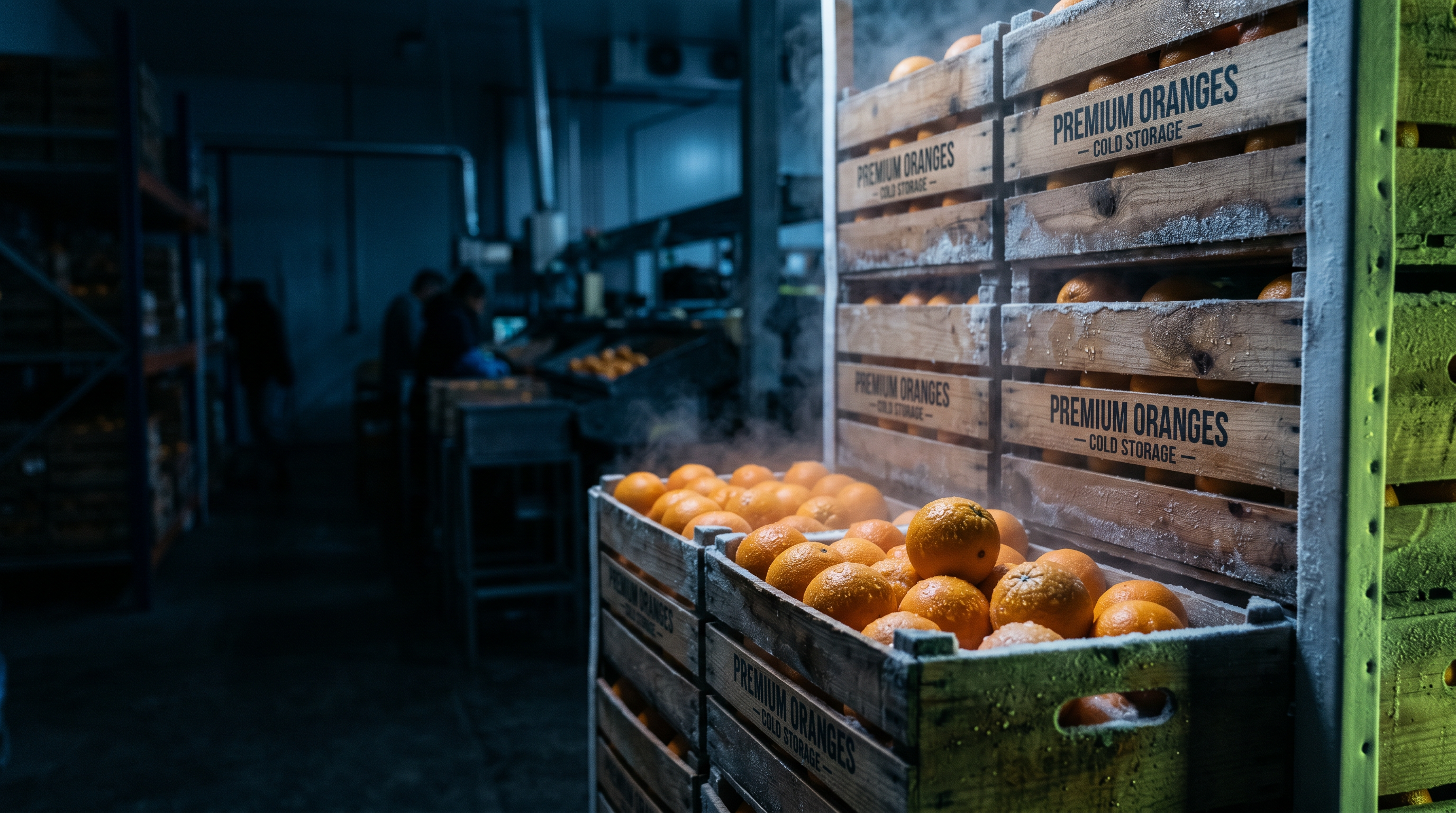
Citrus
Cold treatment clears the border
To control False Codling Moth, the EU requires in-transit cold treatment: e.g. −1°C to 0°C for 16 days, or −1°C to 2°C for 20 days. Core (pulp) temperature must be evidenced, or entry is refused.
EU 2022/632 · EFSAExporter mandates are tightening
South Africa's PPECB requires certified cold-chain handling across perishable exports, from pre-cooling through the reefer voyage, with real-time monitoring increasingly expected.
PPECB · SA perishable-export regulations
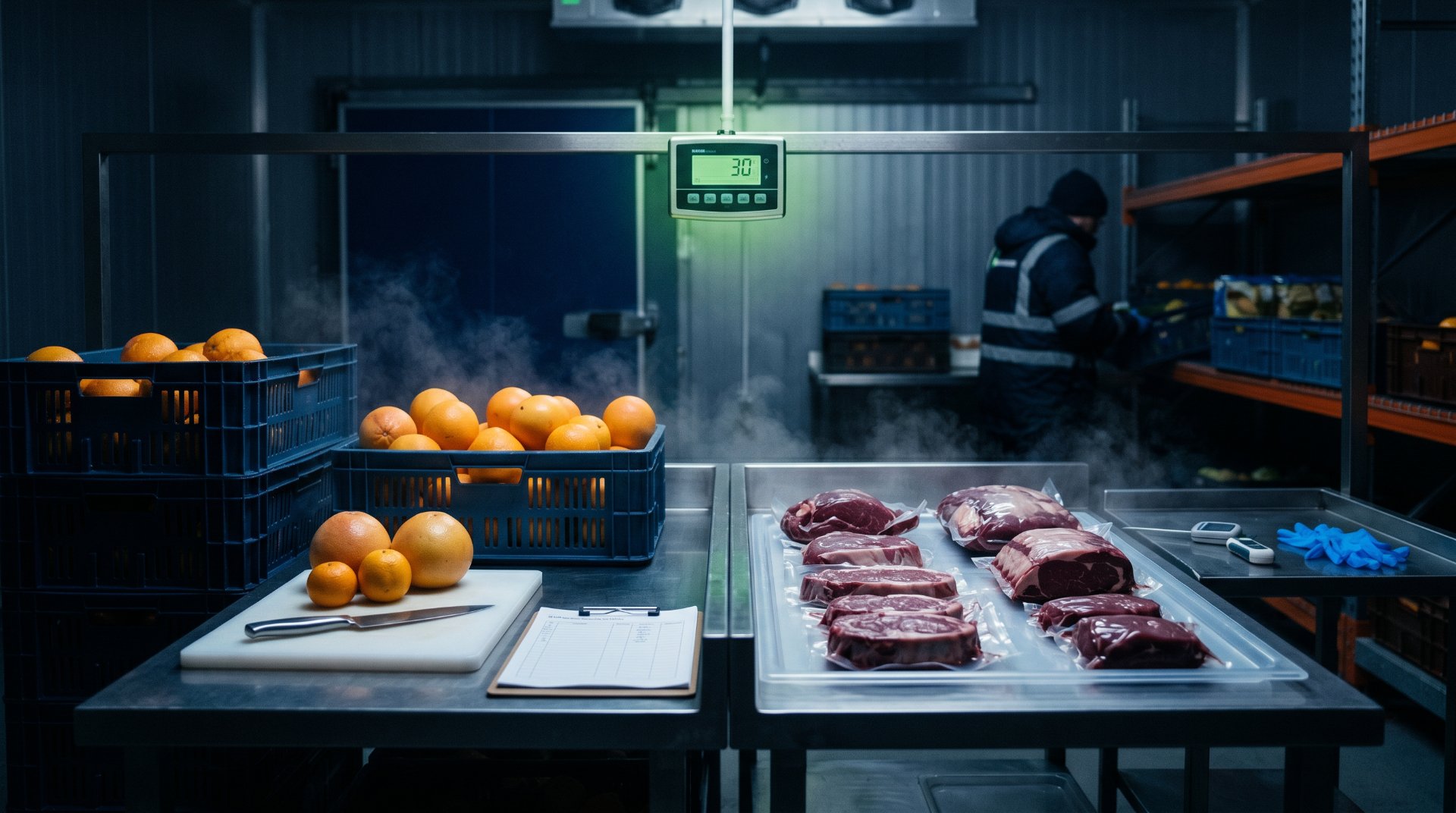
Meat
HACCP makes the record law
Food-safety law requires HACCP-based temperature control with traceable, batch-linked records across the whole journey, not just at hand-over.
EC 852/2004 · FSMA · CodexThe cold band is tight
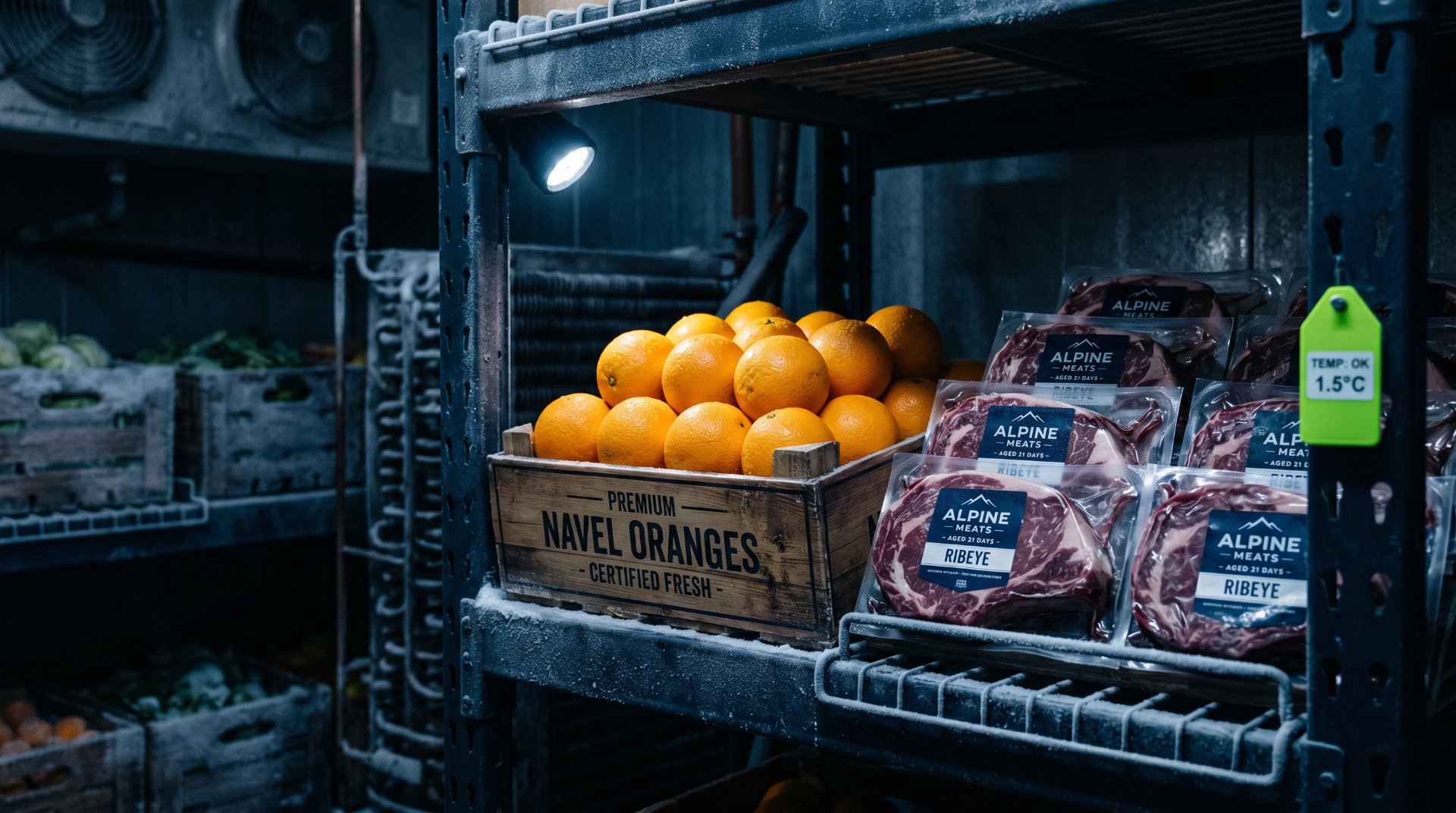
Chilled meat held to type-specific limits (e.g. poultry ≤4°C, red meat ≤7°C); frozen at or below −18°C. Each held, recorded and evidenced per consignment.
EU 853/2004 · CodexCold-chain recording equipment is expected to meet EN 12830, with data exportable for BRCGS, ISO 22000 and FSSC 22000 audits. iMSense is EN 12830 certified.

Live condition data
Temperature, humidity, light, tilt/shock and GPS, streamed 24/7 from pre-cool to delivery.

Instrument-grade accuracy
±0.5°C, configurable 10–120 minute intervals, 60- and 120-day trip durations.

Any lane, any carrier
Global 2G/4G/5G roaming SIM. Place it in the load and send with confidence — any lane, any carrier, no integration.
EN 12830 certified
Audit-ready records for BRCGS, ISO 22000 and FSSC 22000.
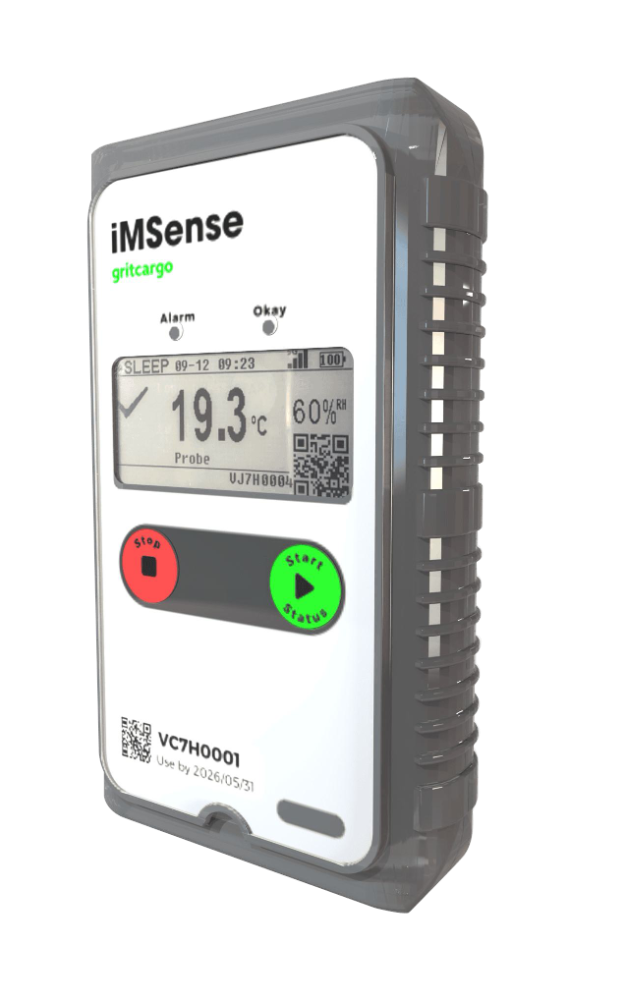
The all-round RTL
Your default for citrus cartons and boxed meat. Live air temperature, humidity, light, shock and location for the whole consignment.
Core & pulp temperature
An external dual-temperature probe reads the cargo's core, which regulators use to verify citrus cold treatment and meat compliance.
Deep-frozen loads
External sensing for frozen meat and the most demanding cold-chain cargo, far below the standard band.

Open-event detection, built in. An onboard light sensor flags the instant a reefer door or carton is opened in transit. An unauthorised open becomes a live alert, not a surprise at delivery.
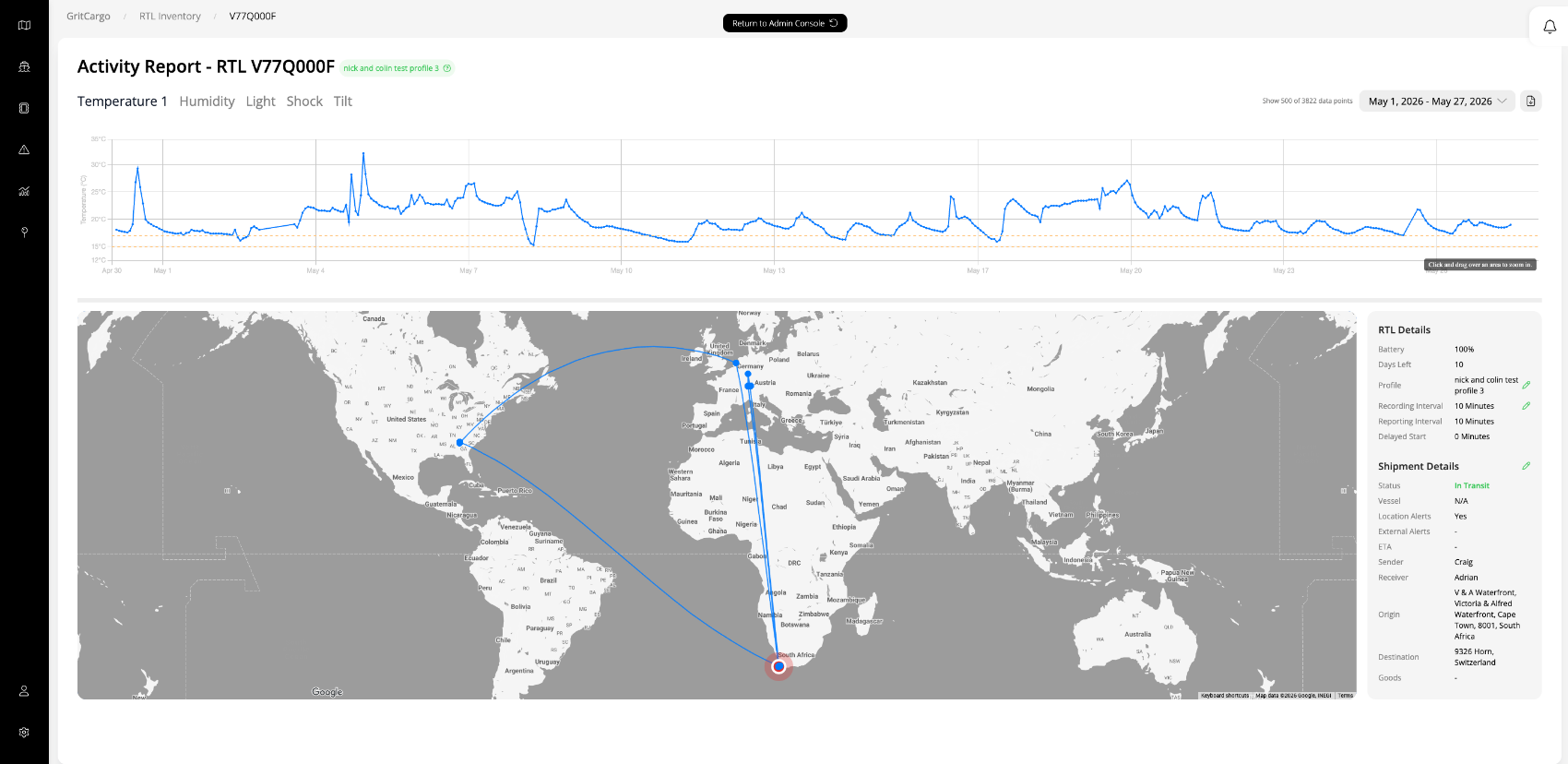
Temperature against the band
Each consignment's trend against its protocol limits, so drift is visible before breach.
A live map of every lane
Reefer, vessel and truck positions with cold-chain status at a glance.
An exceptions queue, not noise
Only loads that need action surface, with evidence attached.

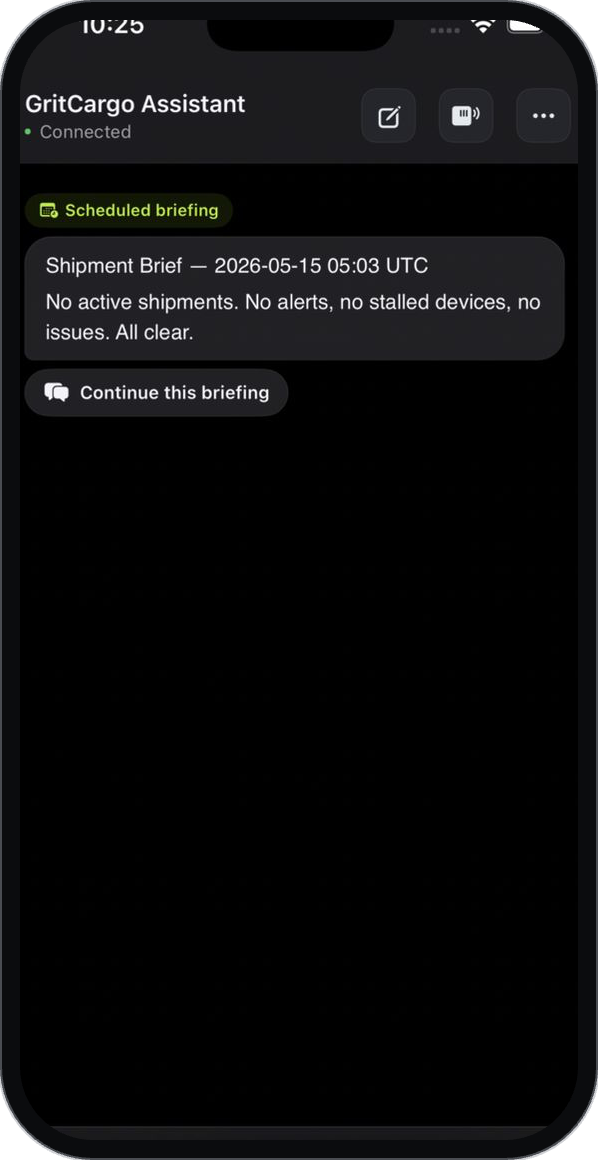
A daily shipment brief
Every active load summarised: in range, on time, nothing to do, or exactly what needs attention, and why.
Flagged before it breaches
GritClaw spots a reefer drifting toward its limit and raises it with the right context and the right person to act.

Ask in plain language
"Which loads are at risk this week?" "How did the citrus lane hold temperature?" Answers come from ground-truth data, not gut feel.
Catch breaches in transit
A live alert the moment temperature drifts, a door opens or a reefer fails, early enough to save the load instead of writing it off.
Prove the cold chain
A continuous, time-stamped record, including core temperature, that satisfies EU cold-treatment, PPECB and HACCP audits.

Win the claim
When a load is rejected, verifiable in-range data is the difference between a recovered claim and a total loss.
Producers & packhouses
See pre-cool performance and dwell time before loading, and stop quality loss before the cargo leaves the gate.

Exporters
Compare carriers and lanes on the temperature actually held and the transit time actually run, then choose by data, not anecdote.
Transporters & 3PLs
Prove service level on every delivery, cut claims exposure, and spot a failing reefer before its next load.

From "we'll find out on arrival" to "we already knew."
Plug-and-play, real-time visibility across every perishable movement: citrus, meat and beyond, from pre-cool to final delivery. Compliant by record, defensible by data. See it on one of your live lanes.